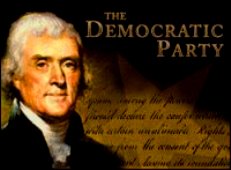
Tuesday, November 11, 2008

The American Identity Crisis

Now that America is post-Election 2008, the news media and political pundits -- as well as both the Democratic and Republican parties -- busy themselves with a host of questions. What went wrong? What went right? What could we have done differently? How can loss ground be made up in the 2010 Midterm Elections and again in the 2012 Presidential Elections? In many ways, people are baffled by the outcome of this election. A few people claimed that there was no way Barack Obama could win as he is the most liberal candidate to run for the United States' highest-ranking office. Obama not only won, he carried the three major swing states: Ohio, Pennsylvania, and Florida and topped it off by turning Indiana, North Carolina, and Virginia from "red" to "blue." Clinton made the argument in the primary season that no Democrat since 1916 has made it to Pennsylvania Avenue without winning West Virginia. Obama didn't carry West Virginia. It isn't conclusive yet, but it seems that he even loss Missouri by a small margin -- a state virtually no president (except one) has made it to the White House without winning for over a century.

The election is over. But what's striking to people is the electoral map. It changed. Have the demographics altered or is there something else? I think the "new kind of politics" movement -- which is essentially old politics calling itself something different -- and "Change You Can Believe In" really begs a more fundamental question. What does this "new kind of politics" consist of? What are its moral values? What will the government be like and how will the American people reach common ground ? The more specific you get with these questions, the more you realize that the Democratic President-elect Barack Obama is only delivering the Democratic Party's platform and nothing else -- nothing new, nothing wide-ranging, and nothing bipartisan.

But back to the fundamental questions that the notion of "change" brings to the table, there is a more fundamental reality that often goes unnoticed, that is at work that needs our attention. I've said before that as a Catholic Democrat, I can't help but notice the hyper-liberal, pro-sexual revolution and radical feminism movement in my party and how it has managed to silence the rest of us. To this day, I agree with Democrats often enough on policy, e.g. universal healthcare, but not always on principle, i.e. the view of the human person, of marriage, of society, and on the nature of morality and thus the content of those policies. Modern liberalism is deeply influenced by Enlightenment thinking. The human person is an arbitrary being with no real "nature." Marriage is nothing but a legal contract recognizing that two people are committed to one another -- if anyone cares -- that want government benefits. Society has no real standard or moral objective norm to live up to because human's have no inherent nature and because this is so, society is something that evolves -- it is artificial and arbitrary -- and thus it can be influenced as we see fit. This view is not the liberalism I subscribe to as it is not compatible with my Christian faith.

Though in realizing this, it strikes me that the "culture wars" in America and the political divide that is even finding its way into our churches all point to one fundamental reality: identity. In the modern world, as is held by contemporary liberalism, the notion of God is both arbritrary and dubious. Supposedly, the presence or absence of God from one's life has no substantial bearing on that person. An atheist is just as moral as any Christian. That may be well and true, but from a Christian perspective that atheist is majorly lacking. An atheist may be say "pro-life," but if human beings are nothing but a random meaningless arrangement of matter in motion -- no different in substance than a chair or a tree -- on a tiny dot called earth in a sun-beam, in a vast, cold purposeless cosmos, the idea that human beings have some sort of "dignity" or "value" is questionable. Why not destroy a few tiny cells or abort a baby? Why not kill a criminal? What really is "justice?" Why should murder be wrong, if there is no universal reason as to why it should be so? Without God, there is no objective giver of the moral law, thus no moral laws. Morality collapses on itself and becomes truly relative. But how an atheist, whose mind is composed of only matter and whose thoughts are the results of the random interaction of atoms, with no objective end or goal in mind (thus not concerned about the subject knowing any objective truth because no such reality exists), comes to any conclusion about truth, about God, etc, presupposing their views are true is beyond me. It's logically impossible.

Back to the notion of identity, America has no cultural identity. What does it mean to be an American? What are "American values?" It seems to me there are as many answers to this question as there are American people. "We the people..." as our Constitution reads have never ever been a monolithic in our way of life. This is both good and bad. Another point that is particularly relevant, especially from a Catholic perspective, is that the American political experiment in which has set the structure and molded the society in which we carry out our daily lives is wholly and entirely a Protestant experiment. In Europe, Protestantism had to establish itself within a society and culture dominated by over a millennia of Catholic intellectual, spiritual, and moral influence. Protestantism in the "new world" from its beginning did not share this dilemma, which is a manifest uniqueness to America. While Protestants share with Catholics a love of God, acknowledgement of sin and the need for conversion, a biblically-based moral system, and the necessity of family and community, Protestants also have given this country a radical emphasis on freedom, individualism, personal conscience, self-determination (versus discovering), etc. It is self-evident that the American notion of "freedom" is profoundly different than the Catholic understanding of freedom. The radical individualism, which is a result of a "sola scriptura" faith and a break from authority, imprints upon us -- I think -- a tendency to have concern only for ourselves.

Samuel Huntington, a political scientist wrote a book entitled Who Are We? He basically asserts that American identity has become increasingly more obscure. He stridently attempts to address the question in the terms of what he calls "the American Creed," which encompasses the values present in the debate that shaped America’s founding—"the essential dignity of the individual human being, of the fundamental equality of all men, and of certain inalienable rights to freedom, justice, and fair opportunity." Huntington -- before he starts making claims that I disagree with and won't go into here -- believes a central problem with American political identity is the growing immigration challenge. I agree with this to an extent. The decisive turn around in American sentiment on immigration is the composition of the American immigrant populace—for the first time in our history, the majority of immigrants in the United States speak one language and are from one country—Mexico. This unprecedented reality presents a real challenge to the question of American cultural identity.

Immigration in itself naturally leads to the development of subcultures that assimilates into some larger culture. But since those subcultures are so many, so large and so dramatically different in the United States, the larger culture is simply mere co-existence, usually with a lot of tension. There was a point in early American history where people believed in manifest destiny—the notion that the United States was destined to span from the Atlantic seaboard to the Pacific Ocean. The people of the United States, while not monolithic, really shared a common experience; this is especially true for the immediate generations after the American Revolution. But in modern America, there is no singular national destiny. Huntington says that "Americanization" -- which means things such as making English the national language or requiring that everyone at least know how to speak English -- of these groups are now-a-days really "un-American." Any attempts toward "Americanization" in Huntington's view are easily dismissed as connotative racism, sexism, class domination, religious intolerance, and so on. In essence, contemporary political correctness and cultural thinking by its design complicates attempts not only to lay down defining parameters of American identification, but toward the unity of American subcultures versus the tension of co-existence.

Most recently, I read a book called The Big Sort by Bill Bishop which I can't recommend enough. He is more on point than Huntington in my view. Bishops' thesis is simple: Americans have segregated themselves both politically and culturally. It is a natural human tendency to gravitate toward like-minded individuals. Given that at the social level, humans seek those whom they can identify with and given that the ownership of private property is a right, it follows that, if possible, people will move to places where there are people like them, which naturally makes them more comfortable. However, the often unseen consequence is that America has divided itself into communes which are entirely culturally and politically conservative or liberal. Bishop puts it this way:

America may be more diverse than ever coast to coast, but the places where we live are becoming increasingly crowded with people who live, think, and vote like we do. This social transformation didn't happen by accident. We've built a country where we can all choose the neighborhood and church and news show — most compatible with our lifestyle and beliefs. And we are living with the consequences of this way-of-life segregation. Our country has become so polarized, so ideologically inbred, that people don't know and can't understand, and can barely conceive of "those people" who live just a few miles away.
This evident tendency is self-reinforcing. The more a specific region is monolithic politically, the more extreme the group can get. This, of course, turns-off people of the opposite view or those of a more moderate view, which allows the region to be even more monolithic. At the political level, local election between two parties is absurdly non-competitive. Depending on the demographics and thus, the political orientation, one party usually wins the area in a landslide. Local, or even state parties have enough support to tackle virtually every issue. As can be seen, political party primaries are dominated by partisan, party activists. At the national level, this reality translates into the non-existence of moderate candidates, a partisan nightmare, and an eternal gridlock of legislative action in Congress, a war for the presidency, and most troubling of all, the Supreme Court has become a pantheon of nine gods who we fight over to ensure they share our views. [This cannot be over-emphasized!]

This living dynamic reaffirms the tendency to only listen to opinions one agrees with, have little tolerance of other views, and to become all the more extreme in one’s own perspective. A simple glance at a presidential electoral map -- broken down into county, city-wide, state, and regional patterns -- confirms this observation (view the map and click state by state and look at the breakdown by counties.) Urban areas vote dramatically different than rural ones. People at the bottom of the socio-economic scale vote dramatically different than those at the top of the socio-economic ladder. The differences in these groups matter because if like-minded people flock toward one another, prosperity can be found at its highest where the most socio-economically advantaged reside. Bishop notes that education had always predicted city growth and after the 1970s the cities that grew the fastest and the richest were the ones where people with college degrees congregated. It's not really news that intellectual elites tend to vote Democratic and not so surprisingly, the most esteemed universities and colleges in America are in areas where the wealthy and well-educated commune.

This dynamic has found its way into American churches. Many evangelical, fundamentalist Christians – in concert – enter the world of politics with concern for abortion, marriage and family issues as top priorities – none of which are negotiable. They are the current base of the Republican Party. Other Christian denominations may emphasize a "social gospel" which entails social justice, fighting oppression and bigotry, promoting personal "choice" on abortion, and accepting gays and lesbians, which leaves them in the Democratic column. In essence, religion in America is now being interpreted through the framework of political concepts, i.e. secular schools of thought. There is "liberal" Christianity and "conservative" Christianity. Many churches have become monolithic in their political views because people even prefer to worship in like-minded congregations. It's why many Protestants "church hop," particularly if they are say, a pro-choice liberal, and the pastor consistently condemns abortion and gay rights. They'll find a church that shares their view. It seems then that the measure for the "true" church or a "good" church is how it lines up with our own political views. The use of religion as political mechanism has only deepened the divide between the people and it's alienating people from God.

Just recently in listening to two political analysts debate, one of them made the comment "the values of Republicans and Democrats [the mainstream base of both parties] are very much at odds. We do not agree about the most fundamental issues." The fundamental issues are many: abortion, birth control, gay unions, guns, education, and the environment, and many more. The parties (and the people) not only disagree on policies, but on principle. The fact that the country segregates itself into isolated communities reaffirming their own beliefs versus having a meaningful dialogue only deepens the problem. It's a spiraling cycle.

Americans have arranged themselves geographically in terms of economics and politics in the last thirty years. While the free choice of where to live is wonderful, it also naturally generates economic inequity, cultural and social misunderstandings, and political gridlock. Bishop wrote an interesting line in his book: We have created, and are creating, new institutions distinguished by their isolation and single-mindedness…we have worked quietly and hard to remove any trance of the ‘constant clashing of opinions’ from daily life. It was a social revolution…entirely unnoticed.

Fundamentally, the American people isolate themselves into groups that inevitably become partisan, political think tanks form with whole, entire comprehensive agendas that are often not open to debate or revisions by opposing groups. The question of American identity, I think, is fundamental to how the country moves forward. The question of identity must be answered before you can decide what direction you need to go. A world without God is a world without an identity. American cultural identity is one of clashing and disagreement about what America is and what she should be. In some sense, that has been America’s identity since the days when the Founding Fathers debated over the Constitution of the United States and the role and structure of the government. Today, even, that same question is still being debated.

As Roman Catholics, we may not all agree with everything I've said -- all of which are not necessarily my own view, but it should give us pause. If partisanship and factions, even within the Church, is the norm of our "culture," it is ever more pressing that we be counter-cultural. We can't ever fully support secular schools of thought because they can never, no matter how well reasoned they are, encompass the fullness of truth that is in the Gospel. It's easy to fall into the temptation of partisanship, of cultural divides, and accepting the status quo, but that's not how we're called to live. Let's hold each other accountable. It's been said that because we've been conditioned by our culture, American Catholicism is -- and I quote -- "nothing more than another form of Protestant Christianity." Let's pray that the thinker who made this claim is wrong in the long-term. If we're going to advocate social change, insight as to how we have decided to arrange ourselves may prove to be useful.

Thursday, May 1, 2008

Lost in the Cosmos: the Plight of Man in the Modern World

The famous atheist-scientist Richard Dawkins, author of The God Delusion arguably would have almost certainly failed any philosophical course on Logic unless he had the wonderful luck of studying under a professor who is also elementary in his reasoning skills. I read his book. It is not convincing. It was an absolute riot from cover to cover. There is no scientific argument that contests the existence of God. There is no sound philosophical argument that makes the existence of God unlikely. He talks about how intelligent design theorists point to ‘seeming designs’ in the universe without qualifying how things can only seem to be designed without actually having been designed. Are computers only ‘seeming designs’ despite their complexity and obviously designed-construct? He even rants about how ‘irreducibly complex’ universe is and jumps to the conclusion because this is so a Creator would be infinitely more complex and thusly improbable. Does that even make sense? I don't think it does. He throws around scientific facts and theories using eloquent terms without qualifying how this negates the existence of God or how his idea of an ‘irreducibly complex’ universe that somehow (conveniently) just exists is superior to the idea of creation by God. He fails to show why belief in God is irrational and fails in his mission to show that belief in God is delusional. So why is there so much hype about the book? It is a book about God.

A three letter word, such a small word, brings to mind the question of the Divine Reality; it induces a complicated multi-tiered emotion of both love and hate. In the history of our species, people have fought, died, bled, sweat, loved, hoped, and found moral rebirth in the name of God. The prevailing question in the modern world is, why believe in God at all? It is quite fashionable to believe that all the findings of science, one and all, are completely adverse to and inconsistent with the propositions of any religious tradition. Any atheist asks himself, how could any rational human being believe in God? As an atheist-to-Catholic convert, I will admit, this was a mind-boggling question. I was baffled that some of the most intelligent people I knew were devout religious believers. But in my journey, I found more than an answer, I found a new question: how can any rational human being not believe in God?

Despite my near idolatrous worship of intellectualism—Lord have mercy—I am admittedly a closet-case romantic heart. In the spirit of romanticism, imagine gazing into the celestial sky, lost in the beauty and splendor of the heavens above. It fascinates us all. Internally, we all wonder, what more is there? Beyond the specks of light lies a mystery of how it all came to be. The simple gesture of staring into the night sky can raise the most profound questions for all who share in the human condition. Why is there something rather than nothing? Why do things exist? Why is there life at all? Why is there evil and suffering? The scientific field of cosmology is essential to these questions, in it we study the universe as a whole—its structure, origin, and development. Our understanding of the universe is so fundamental to our everyday life. It shapes our worldview, our philosophy of life, our view of the human person, and thus our moral framework of life and behavior. The advances made in this field and of any human discipline are—or should be—oriented toward helping mankind attempt to answer the fundamental questions of human existence.

It is hardly surprising that many have come to expect modern science to answer all human questions to their satisfaction. This is not to say that science cannot provide us with incredible amounts of valuable information. The sciences offer knowledge that is properly secured by proofs, established methodically, and logically consistent. We know more now about the development of the world, of human life, the laws that govern nature and of the mystery of man himself and all that regulates our relationships with one another in this web of life on earth than our ancestors. It is profoundly perplexing to consider this reality. We have relieved ourselves from unbearable physical labor, eliminated the threat of many diseases with diagnosis and cures, and through this, we have raised the human life expectancy. In the past two hundred years, particularly, mankind has faced changed at unimaginable proportions. But with all of this change brought by science, we face new challenges. We face environmental destruction and the exploitive and dehumanizing effects of technology, to name a few. Progression is ambivalent—with development comes the potentiality of ruin.

The question of ruin and of, perhaps, changing or abolishing our human nature via technology—particularly with the growing transhumanism movement—begs the question of what it means to be human. Inevitably to question what it means to be human will lead to the question of God. In the modern world, there are countless religious and non-religious views to the question of God. In fact, the modern approach to religion involves this curious notion that every religion is of equal value and therefore, equally true. Logically, this is impossible as it goes against the intellectual principle of non-contradiction. Judaism and Christianity can’t simultaneously be true because Jesus of Nazareth would simultaneously be God and not God. All religions cannot simultaneously be true, which implies that either they are all wrong or one has supremacy over the others by the merits of being completely true. Surely, two plus two equates only four, not five, six, and seven as well. Truth by its very nature entails one answer. The answer in itself may contain many parts and be rather complex. However, if you were to remove any part of the answer it would no longer be a true, full, and authentic answer.

Arguably, there are certain truths that all religions possess. I am speaking mostly of major world religions. Most eastern world religions—Taoism, Confucianism, Buddhism, etc—are in fact life-philosophies that were established as religions arguably for political reasons and even Hinduism itself comes across as a philosophy of life at first glance before taking into account the pantheon of gods that manifest the one Divine Reality and belief in reincarnation. A certain truth that appears all across the world is that we cannot reach the “divine realm” and be before the Divine Reality imperfectly. According to Christian revelation, we may reject this entire possibility or attain Heaven, but not without a process of purification. In Hinduism, a person must go through multiple cycles of life in order to attain communion with this Divine Reality whatever this Being may be. The understanding is similar, not the same certainly and the application is different. But both understand a common religious truth, if you will.

The world's religions may all equally hold certain truths that are fundamental, but only one logically may contain “the fullness of truth” in the words of St. Paul, if any of them are true at all. Certainly most religions embrace a God and a detailed moral code, but when you began to get definitive and specific, the religions of the world began to diverge greatly even within themselves. The differences may seem small at first glance, but they are often profound differences that cannot be said to be childish theological disputes. But, the truth of the matter remains, either every religion is wrong to some degree if not entirely or one of them is completely right. Rationally, there is no other possibility. The accounts of human origin recorded in religious scriptures most certainly are not naïve fairytales or stolen, integrated work of a foreign culture. Each is a unique understanding of creation and the human person in light of that understanding. Genesis, in the Judeo-Christian tradition, represents the fruit of ageless meditations of believing people and the thought of inspired authors sure of their faith. The writing may be considered primitive, but when properly interpreted in historical context and in the light of its theological tradition, Genesis is an exceptional understanding of God, humanity, creation, and the “sin condition.”

Man has a unique situation in the natural order. The cosmos is a mystery. But what is even more mysterious to man is himself. What it means to be human is not given with being human. Man is an embodied spirit—matter that is aware of itself. This is simply mind-blowing. Man is literally thrown into existence faced with this ineffable reality, faced with suffering and decay, and faced with the ominous mystery of death. In ancient and medieval times, not perfectly so and not with the same advanced knowledge, this human reality was the focus of human thought. Philosophy dominated in education. In the modern world, this isn’t the case at all. It seems that every morning we rise to carry on as though we are immortal and nothing is ever going to change. We endure human existence feeling bored, fed up, or at best, blasé. We cannot see what we have: the gift of life. It is heartbreaking that we never notice how much we take for granted…until it's denied us. Often enough, we then become angry with God. There are times that our minds do not have enough to occupy it—when we're at leisure, the vulnerable moments before we fall asleep, long car rides, in quiet places—and it is only then we realize that souls walk within us, restless spirits that can perceive the silence and begin their roaming…drawing forth all the questions of life that we try so hard to ignore because no one wants to see their own sins laid out before them.

The world today is riddled with distractions from the fundamental questions of life—television, music, nightclubs, gambling, videogames, et cetera. The fashion industry, for example, makes millions on selling images and identities because in a world without God, without a clear sight of what it means to be human. We need an identity. We need something to feel the void of emptiness. But it seems even the teens in our society who aren't satisfied with the 'norm' and must be 'different' may go out and find a proper 'different' identity at, say, Hot Topic instead of at Abercrombie and Fitch entirely unaware that the two, Hot Topic and Abercrombie and Fitch, have the same owner. But the cool look and identity of today isn't the same as it was ten years ago, five years ago, and in some ways, it is not even the same as one year ago. The marketing industry must subtly dissatisfy their customers so that they can continue to sell and collect profits; they must continue to sell identities that are temporary because more money is to be made.

We accept whatever science tells us. We accept the status quo. We don’t open ourselves to anything. We create tight little world-constructs and allow very little room for any new information and ideas. Never mind that every 3.6 seconds someone dies from starvation, 48,000,000 million unborn children are slaughtered worldwide in a single year, or that the United States uses somewhere between 70 and 90 percent of the world’s resources to ill-effect of third world countries and impoverished nations. We just change the channel, watch reality-TV and are caught up in someone else’s lives and not evaluating our own. It seems that everyone wants to stay busy and distracted from reality because when we're idle, we're bored in our feeble meaningless and unfathomable existence.

Why has the world become so bitter, cold, and selfish? Perhaps, it has always been this way. But with what we know, should we not be changing? “Progress!” We all proclaim. Yet, again, in must be in accord with our humanity. But what does it mean to be human? Philosophy can help us address this almost impossible question. Through the centuries, religion has also provided answers. These answers, contrary to what many will argue, are not solely in theory and speculation, but in life as a whole, in rites and practices, in prayers and songs, in stories, symbols, images, feasts, art, ministries, in communion, and in intellectual tradition. Religion is written into history. Religion calls man out of himself, to be a moral creature, to be selfless, and loving. Man often neglects this vocation and because this is so today, as in the past, there are those who question God and criticize religious practitioners. Today, many religious people have unquestionably lost their sense of God in the midst of the crisis of our age—God has been obscured in the secularity of everyday life—in culture, peer pressure, ideologies, politics, habits, experiences, and personal choice.

We live in a world where we don’t have time for anything especially God. In the past, the day ended at sunset, which made time for long evenings of conversation, communal time, reflection, or leisure. When people were sick they stayed in bed and rested until they were better. Now we have electricity and we can stay up all night writing term papers, reading, watching Youtube.com, playing videogames—totally isolated from everyone else and free not to think of our responsibilities. We take antibiotics immediately when sick, which we should to preserve our health, but in doing so, we also don’t take a day off, we don’t miss a day of work—we stay busy, busy, busy. The structure of American society makes it difficult to include God in your life, to ponder the most profound questions there is to ponder, and to really devote yourself to charitable causes in addition to a full work load.

All of our human challenges endlessly bring us back to the question of God. God is irrevocably intertwined with the questions that have driven us rational animals since we began to inscribe words on tablets of clay. Who am I? From, what, why, and for what purpose am I? Can I really believe anything? That is, can I trust? What should I believe, and whom may I believe and trust? It is such questions that follow man as his life flows along, day by day, week by week. Anyone could concur that man from his beginning is perpetually trying to master and understand the human condition. It is obscenely evident in the million questions a child will pose in the course of a single day. What is that? Why is that so? What is that for? And in trying to answer these questions, we all find that we don’t know as much as we thought or the things that seemed so overly self-evident before are now hidden. The question of life comes differently to each of us, but it takes the same impact on each individual. Despite sincere intellectual conviction, Richard Dawkins and other atheists, should see that the God they reject, perhaps, has more to do with our existence than just being a convenient explanation of things yet to understood. Ultimately, it is the search for our origin, our purpose, and our meaning that drives us. And in seeking an answer, we are forced to look to the beginning, and He who made us is waiting for us.

Words of Wisdom from the Holy Father:

"The world needs God. We need God. But what God? In the first reading, the prophet tells a people suffering oppression that: 'He will come with vengeance' (Isaiah 35:4). We can easily suppose how the people imagined that vengeance. But the prophet himself goes on to reveal what it really is: the healing goodness of God. The definitive explanation of the prophet's word is to be found in the one who died on the cross: in Jesus, the Son of God incarnate. His 'vengeance' is the cross: a 'no' to violence and a 'love to the end.' This is the God we need."

"We are not some casual or meaningless product of evolution. Each of us is the result of a thought of God. Each of us is willed, each of us is loved, each of us is necessary."
- Pope Benedict XVI

Further Reading: God and Evolution by Avery Cardinal Dulles

Sunday, March 30, 2008

The Dictatorship of Relativism and "The Abolition of Man"

The Catholic Church holds that "deep within his conscience man discovers a law which he has not laid upon himself but which he must obey. Its voice, ever calling him to love and to do what is good and to avoid evil, sounds in his heart at the right moment...For man has in his heart a law inscribed by God...His conscience is man's most secret core and his sanctuary. There he is alone with God whose voice echoes in his depths." (CCC 1776).

The psychological phenomenon that we have coined, conscience, is not merely a personal feeling or opinion. But it is God attempting to speak to us through our brokenness—through the limits of our humanity—and our conscience in action is our last best judgment at the good or evil of an action based upon our intellectual, religious, and experiential understanding of human nature (i.e. the natural law—the law of human nature.)

This view is vehemently challenged by modernity. We ask ourselves: do moral absolutes exist? Are there behaviors, mindsets, or bits of speech which may be called morally right or wrong—for all people, regardless of how anyone might feel? If not, what would it mean for there not to be any objective standards of right and wrong? What is significant should be given to the fact that many people do not live up to their understanding of right and wrong? These are all pertinent questions.

Moral Relativism

It is a common conviction—based on observation—that moral codes differ in every society. But mistakenly, the conclusion is drawn that morality is merely a social construct of acceptable behavior and habits, and thereby, is fundamentally relative. Certainly there is disagreement among nations and even individual people on what is right and wrong. But mere disagreement does not imply that there is no answer—objective, external, and independent on anyone's personal convictions. If a person is to say, "all religions are equally true," this would yield to reason as nonsensical. By this logic, Muhammad is and is not the last great prophet of God. The immediate contradiction would prove the assertion false.

One might say that there are certain moral rules that all societies will have in common because these fundamental rules are necessary for society exist to defend the initial proposal of relativism. Yes, while that may be true, what is common is not coincidence, but perhaps the universal realization amongst nations of certain moral truths that are fundamental and simultaneously necessary for an operating society, e.g. don't steal, don't murder, etc.

The presumption that there are no facts and no one is right when morality is concerned is severely flawed. It is simple (and more rational) to say, "He has his opinion, and others have their opinions" and that might just be the end of it. But it is another thing to say: morals are based upon feelings and nothing more. If morality is entirely subjective, that is, relative to the person, then discriminating against a person for any specific reason whether it be race, sexual orientation, gender, appearance, height, weight, eye color, or identifying characteristic is not morally wrong—not wrong it any universal sense that would be obligatory for the person to change their behavior or binding on anyone else to also protest. It may, in fact, upset your personal moral taste, but you will just have to accept the moral tastes of others, which is, by the acceptance of moral relativism, just as right as your moral position.

Even more, there is a fundamental self-contradiction to the idea of moral relativism. To say that "all morality is relative" is a self-defeating claim. First, since morality is entirely relative to the person, anyone holding such a position is only saying, "It is my opinion…that all morality is relative." This is not true at all, but rather an opinion and opinions don't hold water in philosophical arguments of discerning whether or not something is true.

But what is more problematic is that the claim "all morality is relative" is a universal claim about the very nature of morality itself. It is a determination of the nature of morality for everyone, in all places, and at all times: it is relative. The fundamental idea of relativism is that there are no absolutes, but the very proposition of relativism: 'there are no absolutes' is an absolute claim and this renders moral relativism an inherent contradiction.

It is such thinking of morality being determined by the person and not any standard that leads to statements, such as, "while abortion might not be right for me, it could be the right choice for someone else." Essentially, every individual determines what is morally right for him or her. But disagreement, again, fails to demonstrate that there are no moral absolutes. If two men were to disagree over whether there is life on Mars or not does not make it logical to say, "while there may be life on Mars for you, there isn't life on Mars for me." It's absurd. There either is or isn't life on Mars.

Consider this curious phenomenon: human beings at all times and in all place have had this curious idea that they should behave in a certain way and they cannot get rid of this notion. If you were to witness two people arguing over the good or evil of some action, they silently recognize an unspoken standard. Even if one of them violated this unspoken standard, there is an excuse, a reason, that in their circumstance, under certain conditions, it was acceptable to violate said standard—the standard is never denied.

But even in recognition of this standard of ideal behavior that humans imagine, we do not behave consistently with it. We know the natural law; yet we break it. Where does this natural law derive? Perhaps, moral truths just exist. Moral truths could only be a psychological projection of a certain standard that we perceive to be ideal based on our realization of the flaws in our social contracts. I think this insight is not wholly untrue—it may be how we began to think about our moral failures—but this it would not make the morals truths necessarily true at all, but rather morally relative because the projection would vary person to person. Then again, moral awareness just may be a biological adaptation that is necessary for the survival of our species. But this too would not imply moral truths.

Why else might there be moral truths? Perhaps we are the creation of a moral Creator, thus, the universe is the purposeful work of a righteous God and our moral awareness, rooted in our human nature, is a result of the character and purpose of the God who made us in His image. But this is too far a leap for our agnostic, post-modern world.

Ironically enough, it is arguable that there aren't substantial differences in each culture's values. Murder, for example, has been wrong in every culture at every time in history. The only thing that changes is the concept of justification. Hitler justified killing Jews because Jews were said to be subhuman and not fit for the beautiful new world order that he envisioned. Murdering of human beings remained wrong. The same can be said of people who favor choice in regard to abortion. They do believe that human life is valuable, but they do not believe unborn babies are "persons" that have human rights. In the same way, supporters of embryonic stem-cell research ask the question, do six tiny cells with human DNA qualify as a "person" with human rights? Hence, in many cases, apparent moral discrepancies between cultures only reflect a difference in perception of the same facts pertaining to a particular circumstance not an outright conflict in the values themselves. We live in a world of competing philosophical frameworks that dictate our moral convictions. The presence or absence of God from these frameworks makes a critical difference.

Read this well-written, articulate "First Things" article by J. Budziszewski entitled "The Second Tablet Project" that eloquently illuminates what a metaphysically unfounded moral theory really means and the effects of removing God from morality.

Tuesday, March 18, 2008

A Clash of Orthodoxies


I read the article A Clash of Orthodoxies and wrote a paper analyzing its rhetoric in a course on philosophical ethics. The fundamental problem is the global tendency toward moral relativism. In the end, this approach leaves all of mankind in a false sense of peace.

I highly recommend the article. Robert P. George is an intelligent man. His points are clear and his moral vision is consistent with his view of the human person, a view that is shaded by all human disciplines.

Read the
article.

This Catholic Loves Benedict XVI

This Catholic Loves Benedict XVI

Knights of Columbus: Champions for the Family

Knights of Columbus: Champions for the Family

The Pro-Life Movement in the Democratic Party

The Pro-Life Movement in the Democratic Party